

 Duration: 8 min
Safety & standards
What Is Hydrogen Embrittlement and How Can It Be Prevented?
Channel: Max Planck Institute for Sustainable Materials
- Intermediate
- English
Hydrogen facility safety: from basics to risk assessmentStep 4 of 5Next step
Safety & standards · Lecture · Advanced
Dierk Raabe Sustainable Metals & Critical Elements11 minEnglish
Published on Dierk Raabe's channel and narrated in the first person by a metallurgist, this 11-minute lecture treats hydrogen embrittlement as a set of competing mechanisms rather than a single event. It introduces hydrogen-enhanced decohesion (HEDE), hydrogen-enhanced localized plasticity (HELP), hydride formation, vacancy stabilization and the defactant concept at the atomic scale. Material behavior is shown to depend on the chemical potential of hydrogen and on trapping sites such as grain boundaries, dislocations and precipitates, and short exposure during welding is contrasted with permanent exposure in pipelines. Advanced in level, the lecture suits engineers and researchers selecting materials for pipelines, tanks and pressure equipment.
This introduction is based on the video’s YouTube description and catalogue details. Source video: independent technical information. No expert opinion has been added to this video yet.
The viewer can analyze competing embrittlement mechanisms such as HEDE, HELP and hydride formation, and evaluate how trapping sites and the type of exposure affect material behavior.
Duration: 8 minSafety & standards
Channel: Max Planck Institute for Sustainable Materials
 Duration: 59 min
Safety & standards
Channel: BakerRisk
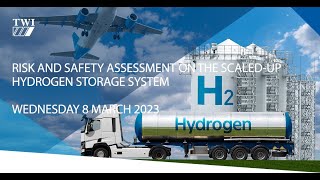 Duration: 58 min
Safety & standards
Channel: TWI Ltd
Let's address hazardous area classification, ventilation, gas detection and code compliance at the start of the project.